
For designers, your resume is more than a summary of your experience, it’s your first design project for a potential employer. Whether you’re a graphic designer, UX/UI specialist, product designer, or creative director, your resume should reflect your aesthetic sense, strategic thinking, and attention to detail.
But crafting such a resume can be challenging. You need to strike the perfect balance between creativity and clarity, visual appeal and professionalism, originality and structure. That’s where an AI resume builder can make all the difference.
In 2025, AI resume builders have evolved beyond simple text formatting tools. They use artificial intelligence to understand your professional background, analyze job descriptions, and generate a personalized, visually engaging resume in the best resume format for your field. These tools help designers present their creativity with precision while ensuring their resumes are readable by both recruiters and applicant tracking systems (ATS).

Let’s explore how designers can leverage AI resume builders to create resumes that not only look stunning but also communicate real value.
1. Why Designers Should Use AI Resume Builders
Designers are visual storytellers. Every line, color, and layout decision communicates who you are as a professional. However, many talented designers struggle with showcasing that creativity in a way that’s optimized for digital recruitment systems.
Here’s how an AI resume builder bridges that gap:
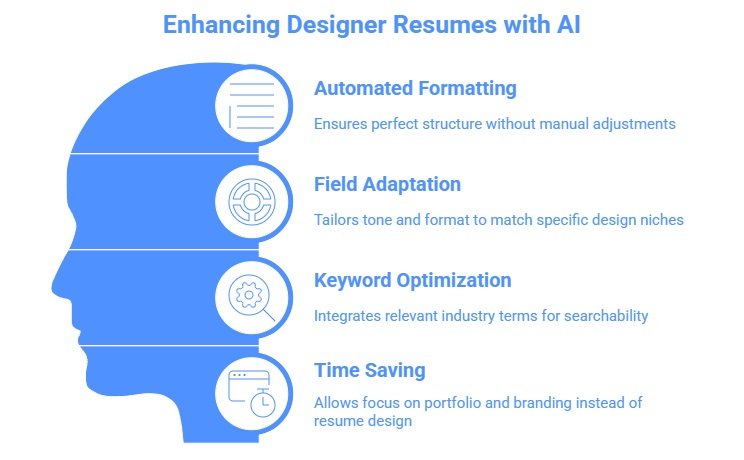
- Automates formatting and layout: No need to worry about margins, alignment, or spacing AI ensures perfect structure.
- Adapts to different design fields: Whether you’re in UX, motion graphics, or web design, AI tailors the tone and format to match your niche.
- Optimizes for keywords: AI integrates relevant industry terms to make your resume searchable in recruiter databases and ATS platforms.
- Saves time: Instead of designing your resume from scratch, you can focus on refining your portfolio and personal branding.
For designers, this means more time for creative work and less stress about whether your resume will get past initial screening filters.
2. Choosing the Best Resume Format for Designers
While creativity is key, structure still matters. Recruiters should be able to scan your resume easily and quickly understand your experience, tools, and achievements. The best resume format helps present your creative background effectively while maintaining readability.
Here are three top formats designers can consider:
A. Hybrid (Combination) Resume Format
This is often the best resume format for designers. It balances creativity and professionalism by combining skills and experience.
- Highlights your core design skills (e.g., Adobe Suite, Figma, UX Research).
- Includes a clean timeline of your work history.
- Perfect for showcasing both technical abilities and career growth.
B. Functional (Skills-Based) Resume Format
Ideal for freelance or multidisciplinary designers who’ve worked across varied industries.
- Focuses on skill categories rather than chronological jobs.
- Allows creative freedom to group accomplishments under design themes like “Brand Identity,” “UI/UX Design,” or “Creative Strategy.”
C. Chronological Resume Format
Suitable for designers with consistent, progressive experience in a specific field.
- Presents career growth in order, emphasizing leadership or senior roles.
- Works best for corporate or agency designers applying to structured roles.
An AI resume builder can automatically recommend the best format based on your experience, goals, and target role ensuring your resume hits all the right notes.
3. Showcasing Creativity Without Overcomplicating
Many designers fall into the trap of over-designing their resumes. While visuals matter, too many colors, graphics, or unconventional layouts can make resumes difficult to read or process in digital systems.
AI resume builders solve this by offering professionally designed templates that are both visually appealing and ATS-friendly. These layouts use typography, spacing, and icons effectively enhancing creativity without compromising clarity.
Tips for creative presentation:
- Use a clean color palette (1–2 accent colors maximum).
- Highlight key metrics using subtle design elements like icons or lines.
- Choose legible fonts to avoid overly stylized typefaces.
- Use consistent margins and spacing to maintain balance.
- Ensure your file is available in both PDF and text-based formats (AI builders handle this automatically).
Remember, your portfolio is the place to show bold creativity; your resume should demonstrate discipline, professionalism, and design thinking.
4. Highlighting Design Skills with AI Optimization
Design roles require a blend of creativity and technical proficiency. Employers often look for mastery of software tools, design systems, and collaboration skills.
AI resume builders use keyword optimization to ensure these skills are recognized by ATS filters. They scan job postings and compare them to your resume, suggesting missing or high-value keywords to improve your visibility.
For example, if you’re applying for a UI/UX Designer role, AI might suggest adding:
- “User research”
- “Wireframing and prototyping”
- “Figma, Sketch, or Adobe XD”
- “Design systems and accessibility standards”
- “Usability testing”
If you’re applying for a Graphic Designer or Brand Identity Specialist position, AI might recommend keywords such as:
- “Visual storytelling”
- “Typography and layout design”
- “Adobe Illustrator and Photoshop”
- “Brand guidelines”
- “Creative direction”
This ensures your resume is not only beautiful but also strategically aligned with industry expectations.
5. Using AI Resume Builders to Personalize Each Application
Designers often apply for diverse roles—agency, in-house, freelance, or startup positions. Each type of job values different aspects of creativity.
An AI resume builder allows you to generate tailored versions of your resume for each opportunity. For instance:
- A freelance designer can emphasize project outcomes and client feedback.
- A UX designer can focus on research, testing, and user flows.
- A brand designer can highlight identity systems, campaigns, and collaboration with marketing teams.
AI also adjusts the tone and phrasing of your summary or experience section to fit the company’s brand voice. For example, applying to a tech startup might call for a casual, innovative tone, while a luxury brand might prefer sophistication and precision.
6. Integrating Your Portfolio for Maximum Impact
Your design portfolio is your most powerful tool. An AI resume builder helps you integrate it strategically within your resume.
Best practices include:
- Embedding a clickable link to your portfolio (e.g., Behance, Dribbble, or personal website).
- Creating a QR code that leads directly to your work.
- Adding project highlights under each job description (e.g., “Redesigned e-commerce app interface, increasing conversion by 25%”).
AI tools ensure these additions are formatted cleanly and remain ATS-compatible. They also recommend which projects to feature based on the job’s focus.
7. Using AI to Write a Powerful Creative Summary
Your professional summary is often the first thing recruiters read. AI resume builders help craft a concise yet impactful summary tailored to your niche.
Example for a Graphic Designer:
“Creative graphic designer with 5+ years of experience crafting brand identities, marketing campaigns, and visual assets that drive engagement. Skilled in Adobe Creative Suite, typography, and visual storytelling, with a passion for transforming ideas into memorable design experiences.”
Example for a UX/UI Designer:
“Human-centered UX designer with a strong background in user research, wireframing, and product strategy. Experienced in Figma and Adobe XD, delivering intuitive digital experiences that improve usability and user satisfaction.”
AI tools analyze tone, keywords, and phrasing to make sure your summary matches the expectations of recruiters and industry trends.
8. The Future of Creative Resumes: AI + Design Thinking
AI is not replacing human creativity, it’s amplifying it. For designers, AI resume builders serve as intelligent assistants that handle structure, keyword optimization, and formatting while you focus on storytelling and originality.
The next generation of these tools even includes Generative AI features that help craft personalized portfolio descriptions, quantify results, and recommend visual layouts that match your aesthetic style.
By combining data-driven optimization with creative presentation, designers can craft resumes that resonate on every level emotionally, visually, and strategically.
In today’s competitive creative industry, standing out requires more than just talent; it requires presentation, strategy, and precision. An AI resume builder helps designers merge artistic flair with professional polish, ensuring their resumes appeal to both human eyes and automated systems.
By leveraging the best resume format, optimizing keywords, and integrating visual design intelligently, you can transform your resume into a true reflection of your creativity and skill.
Whether you’re applying for a full-time design role, pitching freelance projects, or exploring remote opportunities, AI-driven tools give you a distinct edge helping you tell your creative story in the most impactful way possible.
 Join Our WhatsApp Group


Nazim Khan (Author) 📞 +91 9536250020
[MBA in Finance]
Nazim Khan is an expert in Microsoft Excel. He teaches people how to use it better. He has been doing this for more than ten years. He is running this website (TechGuruPlus.com) and a YouTube channel called "Business Excel" since 2016. He shares useful tips from his own experiences to help others improve their Excel skills and careers.


