I do not think most students look for an AI humanizer because they want a completely different essay. Usually, the problem is simpler: the draft already has the right idea, but the writing feels too stiff, too generic, or too obviously shaped by an AI tool.
That is why choosing a humanizer for academic writing is different from choosing one for social posts or marketing copy. An essay cannot just sound more casual. It still needs to keep the argument, the tone, and the meaning intact.
If I were testing a free AI humanizer for academic work, I would not ask only, “Does this sound more human?” That question is too vague. I would ask whether it makes the essay clearer without changing what the student is trying to say. That is the standard that actually matters.
Meaning Preservation Comes First
For academic writing, meaning preservation is the first thing I would check. Some tools make the paragraph sound smoother, but they also change the claim in small ways. That is a problem.
For example, if your original point is that online learning helps students with busy schedules, the revised version should not suddenly say online learning is better than traditional education. That may sound stronger, but it is not the same argument.
A good academic humanizer should keep the original claim, evidence, and logic in place. The wording can become smoother. The sentence structure can improve. But the idea should still feel like yours.
When I test this kind of tool, I always compare the original paragraph with the revised paragraph. If the new version sounds polished but the meaning has shifted, I would not trust it for academic writing.
The Tone Should Stay Academic
Another common issue is tone. Some tools seem to treat “human” as “casual,” but that is not what students need.
An essay should sound natural, but it should still sound appropriate for school or university work. It should not feel like a social media caption, and it should not add exaggerated emotion just to appear more personal.
For example, a stiff sentence like this:
“Furthermore, this demonstrates the importance of education in contemporary society.”
could be improved as:
“This shows why education still matters, not only as a way to gain knowledge, but also as a way to build judgment, confidence, and long-term opportunity.”
The second version is easier to read, but it still fits an academic essay. That is the balance I would look for. If a tool keeps making the writing too relaxed, I would avoid using it for serious assignments.
It Should Improve Flow, Not Just Replace Words
A lot of AI-written essays are grammatically correct but still hard to enjoy reading. The reason is usually flow. Each sentence may be fine by itself, but the paragraph does not move naturally from one idea to the next.
A useful humanizer should improve that movement. It should make the relationship between sentences clearer, reduce repetition, and help the paragraph feel like one connected argument instead of a list of related points.
This matters because academic writing depends on logic. A body paragraph usually needs to move from a claim, to evidence, to explanation, and then back to the main argument. If the tool only swaps words without improving that movement, the output may look different but not actually better.
When I review a humanized paragraph, I ask whether the revised version is easier to follow. That is more important than whether the vocabulary looks more advanced.
Avoid Tools That Rewrite Too Aggressively
Some AI humanizers try to change everything. At first, that can look impressive because the output is clearly different from the original. But for academic writing, I usually see that as a weakness.
Students do not need every sentence rebuilt. They need stiff phrasing cleaned up, repeated ideas tightened, and awkward transitions smoothed out. If a tool rewrites too much, it can easily add claims the student did not make or remove details that were actually important.
For essays, I prefer controlled rewriting. The revised version should feel close enough to the original that the student still recognizes the argument, but polished enough that the writing feels more natural.
This is especially important when dealing with research summaries, literary analysis, or argumentative essays. In those cases, small wording changes can affect accuracy.
Free Testing Should Be Practical
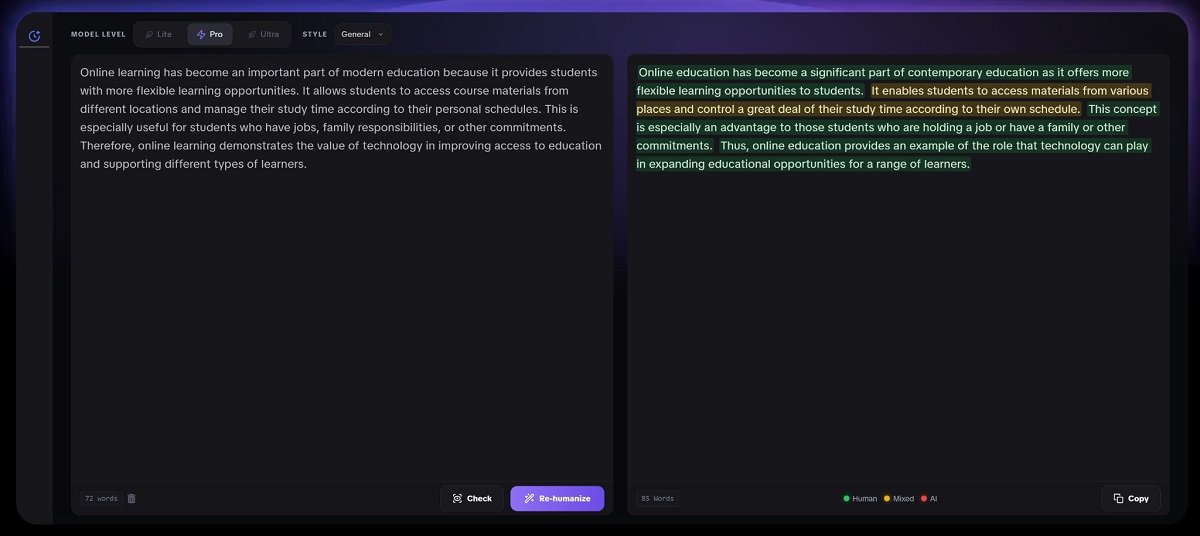
Free access matters because students usually want to test a tool on their own writing before deciding whether it is useful. A tool may look good in examples, but that does not prove it can handle your essay topic, your tone, or your paragraph structure.
I would look for a free option that lets you test real paragraphs, not just one short sentence. You need enough space to see whether the tool preserves meaning, handles academic tone, and improves flow.
The process should also be simple. If a student has to create an account, enter payment details, or go through too many steps before seeing the result, it becomes less useful for quick revision. The best free workflow is straightforward: paste a paragraph, review the output, compare it with the original, and decide what to keep.
A Humanizer Cannot Fix a Weak Essay
This is the part students sometimes overlook. A humanizer can improve phrasing, but it cannot fix a draft that has no clear point.
If the thesis is weak, the examples are thin, or the paragraph does not support the argument, smoother wording will not solve the real issue. It may even hide the problem for a while because the writing looks cleaner than it actually is.
That is why I would use a humanizer after checking the structure. First, make sure each paragraph has a clear role. Then make sure the examples support the claim. After that, use the tool to improve readability and sentence flow.
That order gives you a much better result than trying to polish a paragraph that still has no real direction.
Grammarly vs GPTHumanizer: My Take
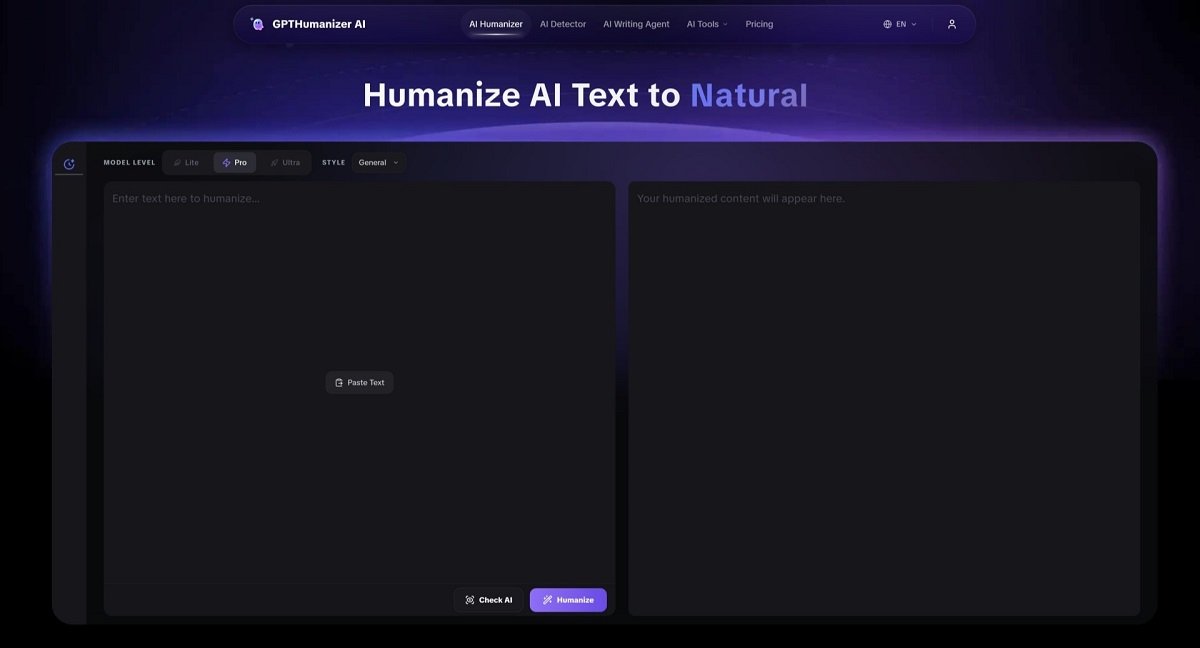
If I were choosing between Grammarly and GPT Humanizer for academic writing, I would not treat them as the same type of tool.
Grammarly is a strong choice if you already use it as a full writing platform. It is useful for grammar, spelling, clarity suggestions, tone checks, and general editing. If you already pay for Grammarly Premium and use it for essays, emails, and documents, it makes sense to keep it in your workflow because it covers a lot of writing needs in one place.
But Grammarly is broader. It is not only focused on humanizing AI-written text. If your main issue is that an AI-assisted essay sounds stiff, repetitive, or too mechanical, then I would look at a more specialized option.
GPTHumanizer is more directly built for that specific use case. It makes more sense when you already have a draft and want to improve naturalness, flow, and readability without turning the essay into something completely different.
My judgment is simple: if you already have Grammarly and need general writing support, Grammarly is convenient. If your main problem is AI-style phrasing, GPTHumanizer is the more focused choice.
The best free AI humanizer for academic writing is not the one that changes the most words. It is the one that keeps your meaning, respects academic tone, improves paragraph flow, and gives you enough control over the final version.
For students, I would choose a tool that makes the essay feel clearer and more natural, not one that rewrites it so heavily that the original argument disappears. The best result should still feel like your draft, just cleaner, smoother, and easier to read.
Join Our Telegram Group

Join Our WhatsApp Group