
The trajectory of consumer and enterprise technology has always moved toward consolidation. We saw it with the smartphone, which collapsed a dozen devices into one pocket, and we saw it with cloud computing, which centralized fragmented server rooms into a unified global utility. In 2026, we are witnessing the third great wave of consolidation: the transition from fragmented AI tools to the AI Agent Workspace.
For the last three years, the industry was obsessed with “Generative AI.” We marveled at chatbots that could write essays and image generators that could create art. However, this early phase created a new problem: “Tool Fatigue.” Professionals found themselves acting as manual bridges, copy-pasting data between disconnected apps. This “Digital Glue-Work” became the hidden tax of the modern office.
The solution has arrived in the form of HIX AI – The AI Agent Workspace. This platform represents the shift from software that simply responds to prompts to software that possesses the “agency” to manage entire projects from start to finish.
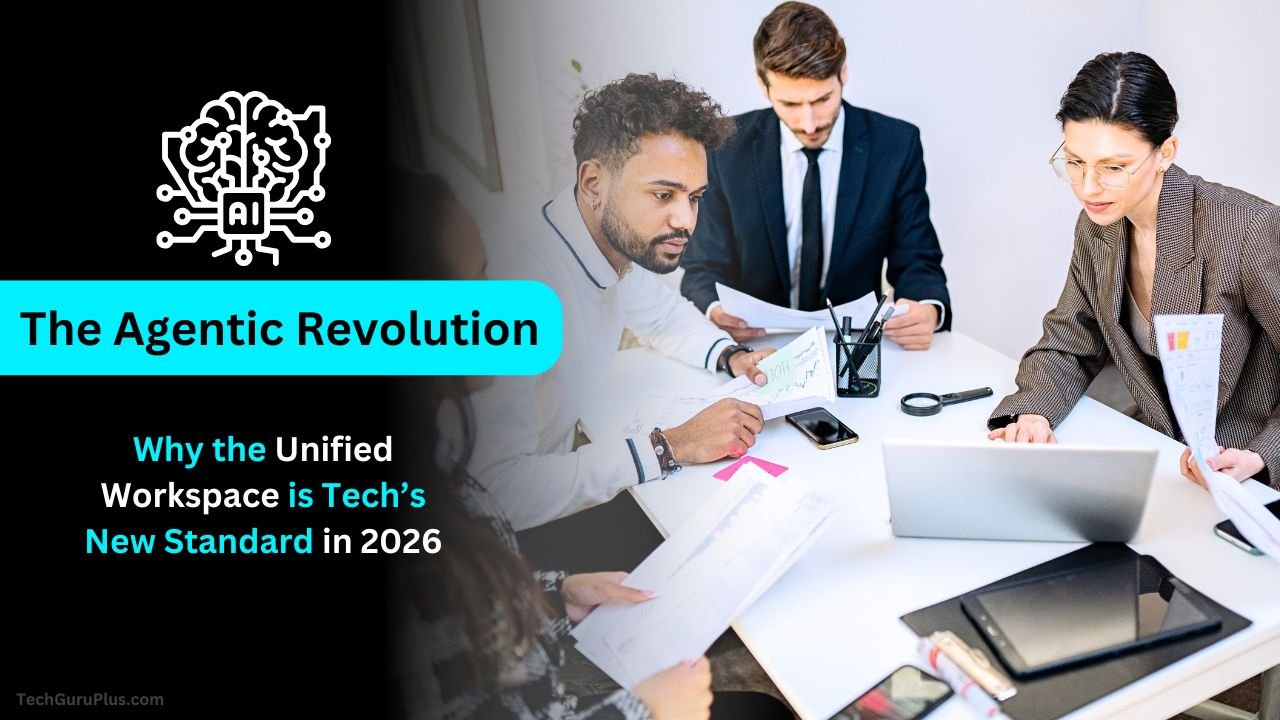
Understanding Agentic Autonomy: Beyond the Prompt
To understand the 2026 landscape, we must distinguish between “Tools” and “Agents.” A traditional AI tool is reactive; it waits for a specific instruction. An AI Agent, however, possesses Intent and Autonomy. Within a unified workspace, the agent doesn’t just answer a question; it understands a mission.
When a tech lead or business analyst sets a high-level goal—such as “Analyze the 2026 security compliance updates for the EU market and revise our internal documentation”—the system doesn’t just provide a summary. It triggers a multi-agent workflow:
- Deep Research: An agent scrapes primary sources, regulatory filings, and technical whitepapers in real-time.
- Strategic Planning: The system identifies the “Golden Thread” of required changes across all company assets.
- Collaborative Execution: Specialized agents coordinate to produce the final outputs, ensuring technical accuracy and brand consistency.
Closing the Production Gap with AI Document
One of the most persistent bottlenecks in the professional world is the “Last Mile” of production—the transition from raw research data to a polished, authoritative document. Historically, this required hours of manual drafting, cross-referencing, and formatting.
In 2026, the agentic model has solved this through integrated production “skills.” The evolution of simple writing tools has led to HIX AI’s AI Document, a sophisticated engine capable of synthesizing complex, multi-source research into high-fidelity professional assets.
Because AI Document is embedded within a unified workspace, it possesses Contextual Continuity. It “knows” the research conducted in the previous phase. It doesn’t just generate generic text; it builds on the specific datasets and strategic goals identified by the research agents. This ensures that the final output—be it a technical manual, a legal brief, or a project whitepaper—is grounded in a single “Source of Truth.”
Solving the Integrity Crisis through Deep Research
A major hurdle for AI adoption in technical sectors has been the “Integrity Crisis”—the tendency of early Large Language Models (LLMs) to provide outdated or hallucinated information. In 2026, the workspace addresses this through Deep Research capabilities.
When an agent is assigned an investigation, it acts as a proactive investigator rather than a passive retriever. It digs into primary sources, live web data, and financial filings. Crucially, all intelligence generated within the workspace is auditable. Every claim comes with a verifiable citation. This transparency is vital for industries where accuracy is non-negotiable, such as fintech, healthcare IT, and cybersecurity.
The Multi-Model Engine: A Best-of-Breed Strategy
In the early 2020s, many IT departments felt pressured to choose a single AI model for their entire organization. In 2026, we have realized that professional-grade work requires different “brains” for different tasks.
The HIX AI workspace operates as a Model-Agnostic Command Center. It orchestrates the world’s most powerful logic engines and assigns them based on their technical strengths:
- Logic and Technical Design: The system utilizes GPT-5.4 Pro for heavy data crunching and complex architectural planning.
- Creative and Persuasive Prose: It summons Claude 4.6 for human-centric storytelling that feels authentic and compelling.
- Rapid Information Retrieval: It leverages Gemini 3.1 Pro to quickly scrape live news, web streams, and real-time market updates.
For the end-user, this complexity is entirely invisible. They interact with a single interface that automatically utilizes the best model for every specific sub-task, eliminating the need for multiple, expensive subscriptions.
Digital Sovereignty: Protecting Your Competitive Moat
As AI becomes the central nervous system of modern business, data privacy has shifted from a compliance checkbox to a matter of competitive survival. Organizations cannot afford to have their proprietary strategies or technical secrets leaked into public training sets.
The AI Agent Workspace provides a Sandboxed Environment. When a team works within this ecosystem, their research, strategic outlines, and proprietary drafts stay within their private workspace. This Digital Sovereignty allows enterprises to build a “Private Knowledge Base.” Over time, this creates a competitive moat that outsiders simply cannot replicate, as the agents become increasingly tailored to the specific context of that business.
Orchestrating the Future of Tech
The lesson for 2026 is clear: the “Great Automation” has not replaced the professional; it has promoted them. The era of the “Digital Glue-Monkey”—where professionals spent 80% of their time on the manual labor of coordination—is coming to a close.
By adopting a comprehensive environment and leveraging high-fidelity production tools, modern organizations are finally bypassing the manual bottlenecks that have hampered digital productivity for decades. We are entering an era where software is finally as ambitious as our vision. It allows for the human elements of creativity, judgment, and high-level strategy to take center stage, while the agents handle the complexity of the execution.
The future of technology isn’t about working harder; it’s about directing brighter. The Agentic Revolution has arrived.
 Join Our WhatsApp Group


Nazim Khan (Author) 📞 +91 9536250020
[MBA in Finance]
Nazim Khan is an expert in Microsoft Excel. He teaches people how to use it better. He has been doing this for more than ten years. He is running this website (TechGuruPlus.com) and a YouTube channel called "Business Excel" since 2016. He shares useful tips from his own experiences to help others improve their Excel skills and careers.


