Template shops and small ops teams rarely fail because they lack another generator tab. They fail because resume packs, invoice mocks, and social covers each picked up a separate login, a separate trial wallet, and a separate habit of “we will integrate later.” An AI API pitch sounds like an engineering project. For owner-operators, the first decision is simpler: which stack survives next week’s template sprint without five passwords.
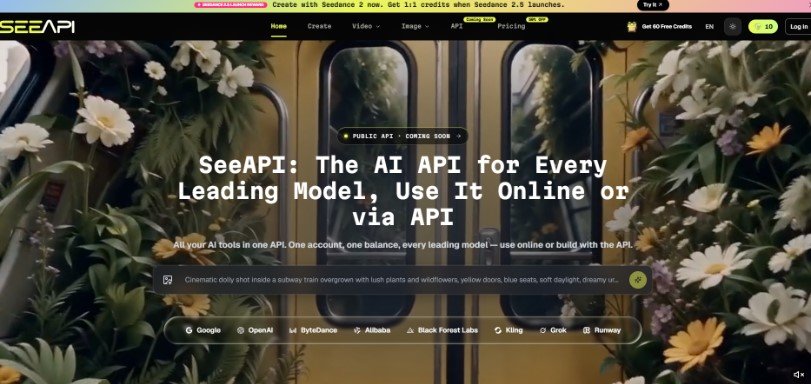
SeeAPI’s public claim worth testing is that you can try prompts, compare models, and generate assets online before you commit engineering time. That sequence matters more than a feature list if your team ships Word and Excel packs every week and still treats “integration” as a vague future chore.
Three Stacks Template Teams Actually Compare
Most shops end up choosing among three paths, even if nobody wrote them down. Path A is a pile of consumer tools. Path B is a premature custom integration. Path C is one online gateway with a single balance, used as a studio until an API is truly needed.
| Path | Weekly cost you feel | When it breaks | Who should pick it |
| A Multi-login tools | Password reset and export hunting | Watermarks and histories diverge mid-sprint | One-off experiments only |
| B Build API now | Auth, billing, and error formats before product fit | Models change while your wrapper is half-done | Teams with a named integration owner |
| C One online gateway | Credits in one ledger; compare in browser | Discipline fails if nobody logs rejects | Shops validating keep-rate first |
Path C is where SeeAPI sits today for many small teams: create in the browser, keep image and video work under one account, and treat deeper API access as a later unlock on paid plans rather than today’s shipping dependency.
The comparison is not moral. Path A can be fine for a one-hour experiment. Path B can be correct for a product company. The mistake is pretending a template zip business has the same constraints as a platform team, then buying tools as if those constraints were identical.
Score The Sprint Not The Homepage Carousel
Use four checks that fit a template week. Can a junior produce a cover mock without a new signup? Do stills and short motion share one wallet? Can you read a reject reason tomorrow? Will a watermarked free export accidentally ship inside a “premium” zip?
In our desk pipeline for template SKUs, the first version that wins a chat reaction often fails at the template’s real width. Header text melted into the background, or a headshot crop warped once the grid margins appeared. That is the compare that matters—not a model beauty reel.
Count the rework the honest way. A morning lost to hunting which trial still holds the “good” PNG is a cost even when no invoice line says AI. Same-day cycles for resume packs leave little room for that scavenger hunt.
Count Logins Before You Count Models
If your sprint already needs three logins to make one product mock, adding a fourth “best” model is not progress. Collapse accounts first. One balance that never expires is useful when a resume pack slips from Friday to Monday; five dying trials are not.
Write the login count on the sprint board. If the number rises while SKU output stays flat, you are collecting tools, not shipping templates. A useful weekly ritual is to delete one unused trial before adding any new model route. That single deletion often surfaces which exports actually matter.
Treat Future API Access As A Planning Note
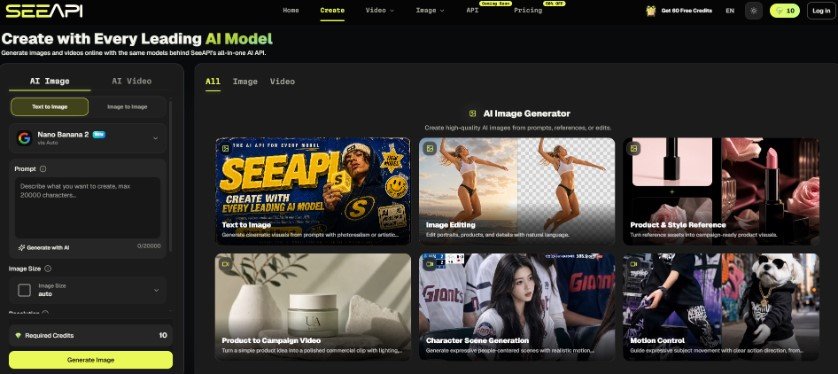
Do not write a purchase order as if production API traffic is already live. Online creation is the operable product right now; deeper API access still sits in the “soon” column on plan comparisons. Plan engineering after your keep-rate on real SKUs is boringly stable and written down where the next hire can find it.
How A One Gateway Week Looks In Practice
Start from the SKU, not from the model list. Example: a modern resume cover needs a clean headshot crop and a muted background. Attach a reference photo, generate inside the image workspace, and judge at the final template size. If text in the mock header becomes unreadable, discard the take before anyone debates “premium texture.”
SeeAPI advertises trying online before integrate: prompt, generate, iterate with zero setup. That is the right order for a shop that sells templates, not inference infrastructure. Keep a one-line reject log next to the SKU folder so the next assistant does not repeat a killed background.
A simple field habit: when I opened the export at the exact slide or doc width customers receive, I stopped trusting phone screenshots. Soft edges that pass in chat become hard kills at publish size.
Separate Explore Credits From Ship Credits
Free tiers stay watermarked and limited. Paid tiers advertise commercial usage and HD watermark-free exports. If a zip file for customers can include an AI still, do not explore on watermarked free exports and “fix it later.” Explore on a labeled scratch folder; ship only from the paid lane.
Credits spent without a reject note are cosmetic. They look like activity and teach nothing when the same background fails again on Thursday. If finance only sees a credit total, ask for the reject log beside it. Totals without kills cannot tell you whether to stay on Path C or escalate to Path B.
When Custom Integration Still Wins Later
If you already have an integration owner, volume that will outgrow click-to-generate, and a single model family you must pin for compliance, building toward an API can be rational—once the online keep-rate is proven. Until then, Path B often burns a week on wrappers while Path A keeps shipping ugly zips.
Provider routing and auto fallback are real gateway features for later reliability planning. They are not a reason to skip the browser pilot. Prove the SKU first. A wrapper that never cleared editorial on sample outputs is just unpaid homework.
If leadership asks for “AI features” on the storefront, translate the request into SKU language: which pack, which asset slot, which kill checks. Without that translation, teams buy Path B theater and still ship Path A watermarks.

Pick The Stack That Survives Next Template Week
Choose Path C if your pain is login sprawl and unclear reject history. Stay on Path A only for throwaway experiments. Open Path B only with a named owner and a keep-rate already measured on real templates.
SeeAPI is a fit when one online balance can replace a drawer of trials this month. It is the wrong purchase if you need high-volume production API traffic today. Match the stack to the sprint you actually run, and let the carousel wait until the zip ships clean.
Put the chosen path on the sprint doc in one sentence. If nobody can say which path you are on, you are already back in login sprawl—even if the homepage still looks modern. Clarity beats novelty when the customer-facing zip has to ship clean before lunch on a normal busy working Tuesday.
Join Our Telegram Group

Join Our WhatsApp Group